Somewhere Between Object and Being: What Is an Artificial Person?
Welcome to the RAP Lab
Ask most people whether they think a chatbot or a robot is “alive,” and they’ll say no, of course not. Ask them a moment later whether they’d feel bad about being rude to one, and the answer gets less certain. That gap, between what we believe and how we actually act, is where the Research on Artificial Persons (RAP) Lab does its work.
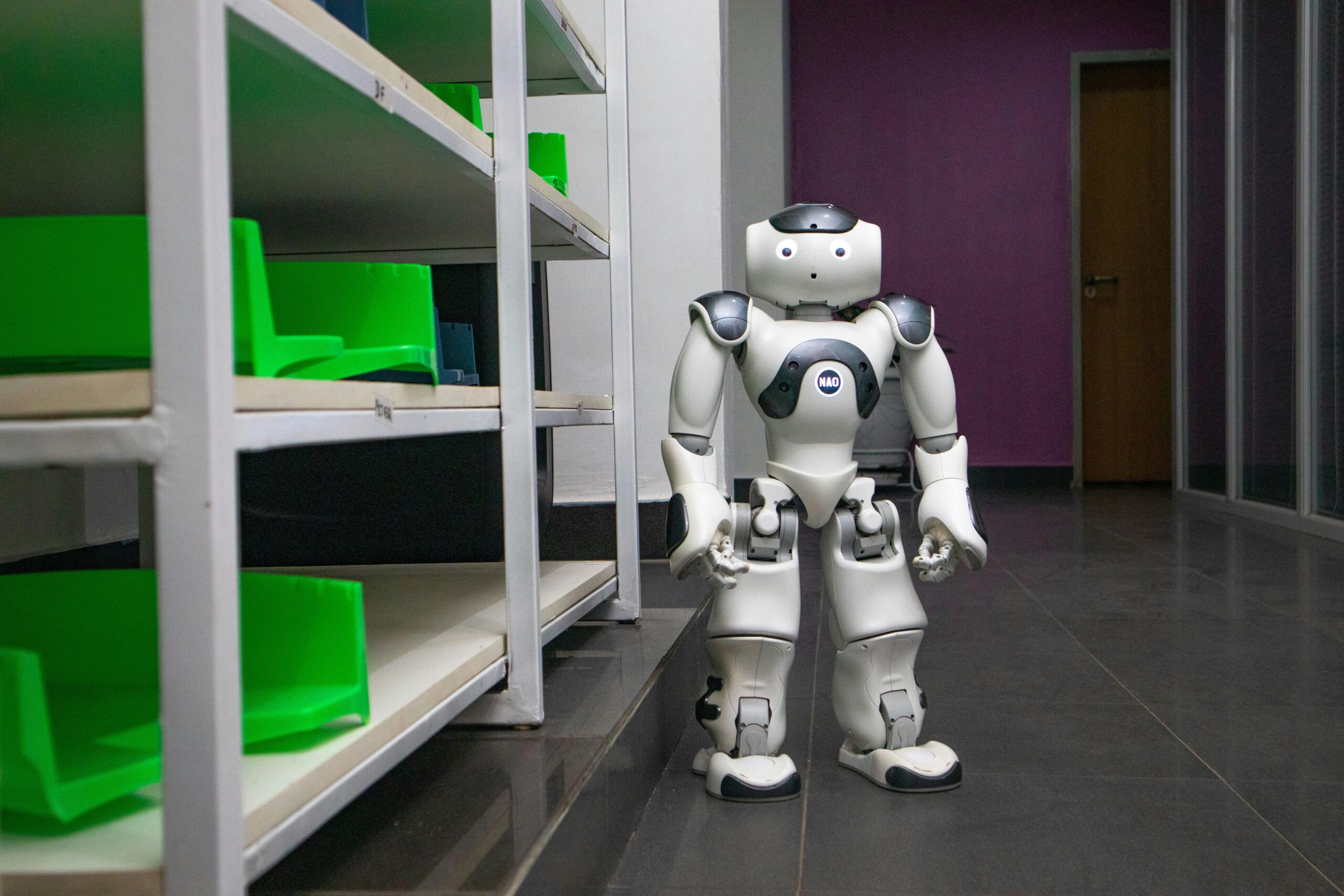
We call these technologies artificial persons: anthropomorphic robots, chatbots, digital avatars, and other social AI agents that present humanlike traits. They aren’t people. They also aren’t quite ordinary objects anymore. Consciously, we know the difference between a human and a machine. But research going back to Stanford’s Media Equation studies in the 1990s found that our subconscious doesn’t sort things so cleanly. Humanlike cues are enough to activate the same social instincts we use on each other, and once a mind starts treating something as a kind of person, it starts forming a relationship with it, whether anyone intended that or not.
This isn’t a hypothetical for the future. It’s already happening. Organizations are deploying conversational AI in customer service and employee support. People are turning to chatbots for entertainment, for company, sometimes for something close to affection. Robots are being built as companions for the isolated. These shifts are arriving faster, and in stranger forms, than most predictions expected, and their effects on individuals, organizations, and society are not yet well understood.
That’s the gap the RAP Lab exists to close. We’re an interdisciplinary group, drawing on psychology, artificial intelligence, neuroscience, robotics, sociology, and ethics, using both qualitative and quantitative methods to study how people actually perceive and behave around artificial persons, as opposed to how we assume they will. Our current work spans how trust forms and breaks around AI systems, which design choices make a machine feel like someone, and what it means for people to work alongside artificial agents as something closer to coworkers than tools.
We think of this as being at the front edge of a new social era. The question isn’t whether humanlike machines will become part of everyday life. That’s already settled. The real question, the one our research is built to answer, is what kind of “person” these machines will be, and what that means for the humans who will live alongside them.
Learn more about our research areas, our team, and our facilities at raplab.ca

Chinonso Anyaehie
Chinonso is a doctoral student researching how technology design shapes human behavior and organizational systems. His scholarly work includes a Best Paper Award-nominated study at ICIS 2025 on quantum computing and a co-authored paper on compassionate health IT design at CHITA 2026. He holds a doctoral-level Design Science certification from VHB ProDok. Before academia, he built a strong technical foundation through industry certifications including MCSA, CompTIA A+, CCNA, MCTS, and MCP, before becoming a leading Web3 educator at Developer DAO, winning the Epic Hashnode Writeathon, and founding Decentrapress.com, one of Africa’s first Web3 education platforms. He later founded BusinessLeaders.ai to help executives make practical sense of AI. His research streams span design science, compassionate AI, and AI innovation dynamics — including the application of econometric methods to study how AI technologies emerge and diffuse across industries and ecosystems.
2 Comments
-
-
Simone Cooper
Consequat mauris nunc congue nisi vitae suscipit tellus. Quis eleifend quam adipiscing vitae proin sagittis nisl rhoncus. Mauris ultrices eros in cursus turpis massa tincidunt.
-

Joel Pearson
Consequat mauris nunc congue nisi vitae suscipit tellus. Quis eleifend quam adipiscing vitae proin sagittis nisl rhoncus. Mauris ultrices eros in cursus turpis massa tincidunt. Integer quis auctor elit sed vulputate mi sit amet. Quis varius quam quisque id diam vel quam. Ultrices sagittis orci semper.